
Earlier today, the Associated Press released their college football pre-season Top 25 Poll. This is the lighting of the proverbial torch signaling to the masses that the start of college football season is imminent. I thought it’d be fun to discuss the Poll in a historical context, and shed some light on why it is so important to the sport. Despite the efforts of the Bowl Championship Series ratings, the College Football Playoff rankings, or the Sports Information Director’s Coaches Poll, the AP Poll has withstood the test of time as the one poll to rule them all.
Origins
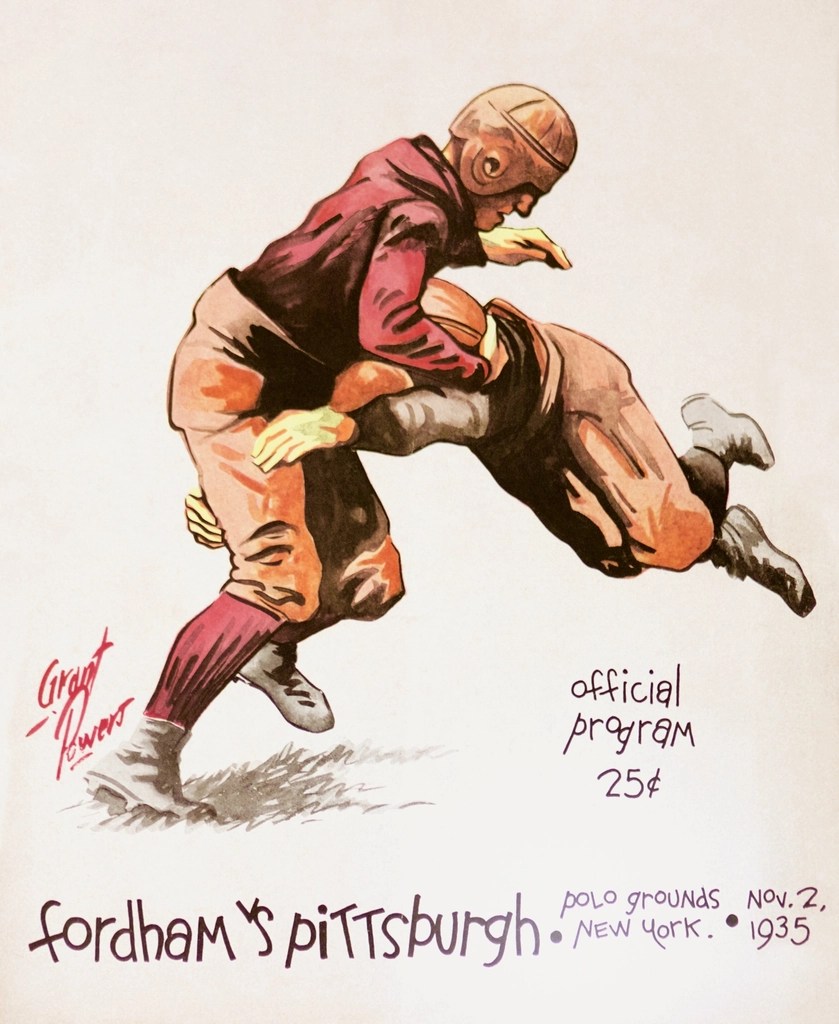
The existence of the AP Poll in college football was born out of anger and protest from Minnesota Golden Gophers’ fans, of all people. A sportswriter named Alan Gould declared that his national champion in 1935 would actually be three teams: Minnesota, SMU, and Princeton. One of Gould’s cohorts, Charles Sherman, pitched the idea of publishing a “poll” of other sportswriters rather than Gould determining things himself. The first such poll was released on October 19th, 1936. The AP Poll originally only ranked 20 teams; it did not expand to 25 teams until 1989. From 1961 to 1967, there were only ten teams ranked by the AP. There were also no pre-season AP Polls before 1950.
Until the arrival of the BCS and CFP, the AP determined the national champion. Sometimes, like in 1990, 1991, or 1997, the two major polls–AP and Coaches–disagreed on the national champion. Even more unprecedented, in 2003, the AP named the USC Trojans its’ champion, even though the LSU Tigers had won the BCS title in the No.1 vs. No. 2 match-up against the Oklahoma Sooners.
History
The Minnesota Golden Gophers were the very first No. 1 ranked team in the AP Poll. Despite a 6-0 loss to Northwestern on Halloween 1936, the Gophers were named the national champion at season’s end. There were between 35 and 47 voters on this poll each week. Other teams receiving votes for the top spot included 9-0-1 LSU with nine votes, and the 7-0 football powerhouse Santa Clara with one first-place vote.
In 1950, the first-ever pre-season poll released by the AP looked very different from the first poll released in 1936. Notre Dame and Army were near the top of the rankings, but much else had changed. Only six of the twenty teams in the inaugural poll in 1936 were in the 1950 pre-season version. There were also now upwards of 120 voters in the poll, compared to the 40-something in the same poll a decade and a half earlier.
The very first iteration of a post-bowl game AP Poll was introduced in 1947, but these rankings were unofficial. The post-bowl season rankings would be the official rankings beginning in 1968, with undefeated Ohio State claiming the top spot. Interestingly enough, the Buckeyes would also be the very first 25th-ranked team in the AP Poll after the service expanded to 25 teams beginning with the 1989 pre-season poll; Ohio State would finish that season ranked No. 24.
Schools and Streaks
The 2025 final AP Poll was the 90th of its’ kind. In those 90 polls, Ohio State and Michigan are tied for the most ranked finishes, with 65. Alabama and Oklahoma are tied with 63, and Notre Dame has 61. The Crimson Tide has been named AP national champion twelve times, four more than the second-place Fighting Irish. The Sooners and Buckeyes follow behind with seven and six, respectively. These four teams also have the most top-two and top-four finishes.
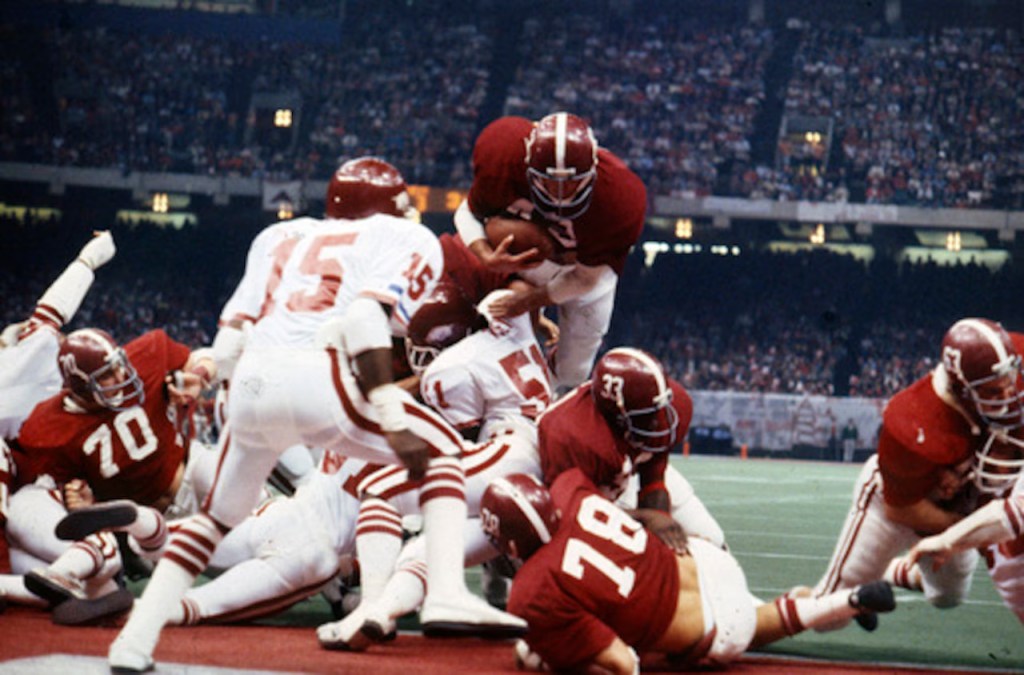
The Buckeyes hold the record for 59 consecutive seasons being ranked (at some point) in the AP Poll. The two teams that come closest to Ohio State are the Oregon Ducks and Georgia Bulldogs, each with 30 consecutive seasons. Alabama has the longest current streak of Top 25 finishes, with 18 straight beginning in 2008. Ohio State is second with 14 straight seasons finishing ranked. The Clemson Tigers were second behind the Tide in this category, having finished in the Top 25 of the poll each year since 2011. After the 2025 season concluded, the Tigers’ streak ended.
I will admit I am a bit biased here, but one of the most impressive streaks in the history of the AP Poll belongs to a team down in Tallahassee, Florida. From 1987 to 2000, Bobby Bowden’s Florida State Seminoles finished in the top five every single season. There’s no team that has even come close to this. Bear Bryant and Nick Saban couldn’t do it at Alabama, Tom Osborne couldn’t do it at Nebraska. The next closest streak was 7 years, which was accomplished by Miami, Oklahoma, and USC.
Speaking of Nebraska, the Cornhuskers hold the record for most consecutive weeks ranked in the AP Poll at 348. This streak began in 1981 and lasted until 2002. The Huskers also have the fourth-longest streak of being ranked in the top ten at 96 straight weeks. The Miami Hurricanes hold that record, at 137 weeks from 1985 to 1993. Despite finishing in the Poll just 35 times overall, the Canes have finished No. 1 or No. 2 ten times, good for almost 30% of their total poll finishes.
Indiana
In 2025, the Indiana Hoosiers went 16-0 and won the national championship. From a historical perspective, Indiana is probably the most unlikely national champion of all time. The Hoosiers have only finished in the AP Poll eight times ever. They finished No. 4 overall in 1945 and 1967, No. 19 or 20 in 1946, 1979, and 1988, and No. 12 in 2020.
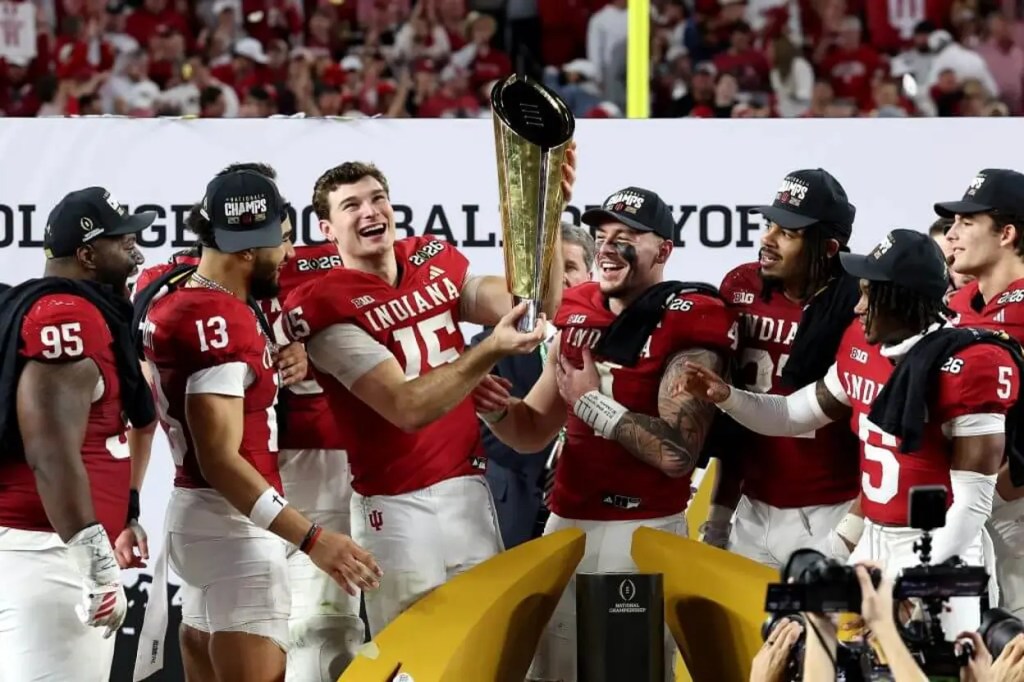
In 2024, they finished No. 10, their highest ranking in the modern era. To go from the program with the most losses in the history of college football to the first team to go 16-0 in a single year is impressive. The Colorado Buffaloes have finished in the AP Poll twenty times. They are closest to Indiana in fewest poll finishes among teams that have won a national championship in the modern era.
Present Day
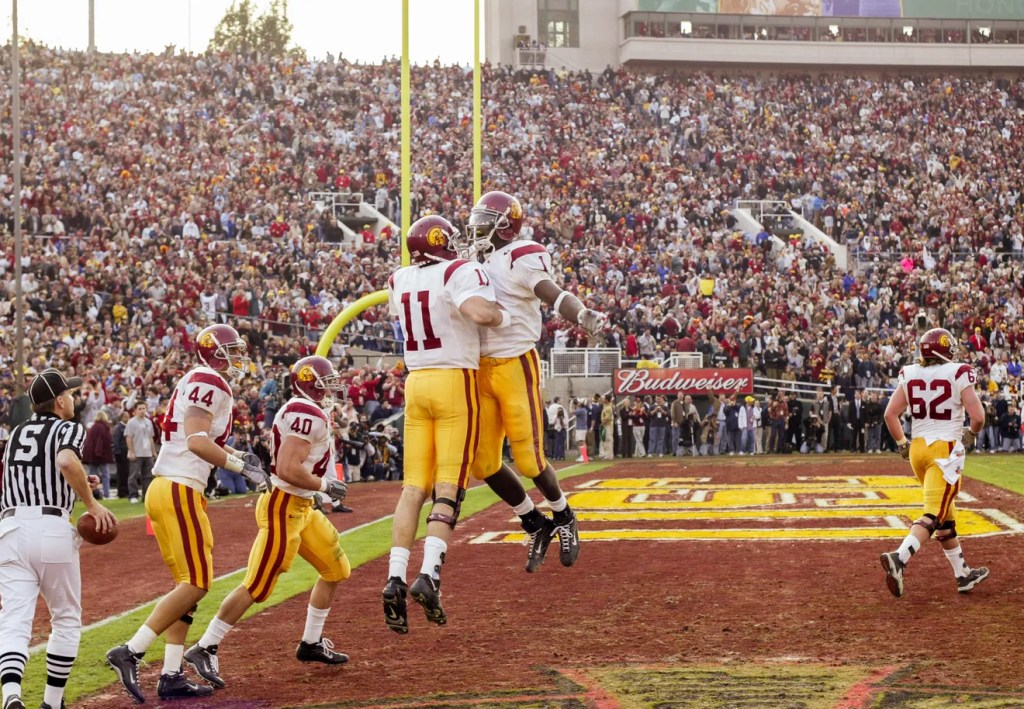
Currently, the AP uses 62 pollsters to fill out their rankings. These consist of sportswriters from across the country. The Buckeyes are the AP’s pre-season No. 1 team in 2026. Ohio State is now tied with Alabama for the second-most pre-season No. 1 selections at nine; Oklahoma has the most all-time with ten. Only two times in the history of the poll has a team been ranked No. 1 in the pre-season and stayed in that spot each and every week through the final rankings of the season: 1999 Florida State and 2004 USC.
The SEC and Big Ten continue to dominate the polls, accounting for 17 of the 25 spots. The Big Ten claims the top-two spots with Ohio State and Oregon, who are also the leading receivers of first-place votes. The SEC has 5 teams in the top 10, and 7 of the top 13. The ACC continues to be shown (well-earned) disrespect on a national level, as Miami, SMU, and Louisville are the only ranked teams from the conference. Unfortunately, the Group of 6 has no representative, as the bottom slot is always reserved for an underachieving SEC team. This year’s honor goes to the Missouri Tigers, a team that went 8-5 in 2025, and will likely finish with 5 or more losses as the 24th-ranked team in the polls in 2026.
Many fans or pundits want to get rid of the polls, specifically pre-season polls, altogether. The AP Poll is not the official rankings system for determining a champion anymore. The College Football Playoff Committee puts out rankings each week starting in late October/early November. These rankings determine who gets in, who gets what seed, who goes on the road or gets a bye in the playoffs, etc. But, ultimately, what shapes these rankings from the CFP Committee? I have my doubts about whether or not every member of that committee watches every game in the country each week or at least gets eyes on highlights of most of the big names from the more well-known leagues.
These members likely rely heavily on the AP voters, who, as a collective, probably have a pretty firm handle on what is going on in the sport from a national perspective. While there are almost always some slight differences in the rankings, they are generally fairly similar. Polls have played a huge in the history of our sport, especially in determining champions. Despite actual national championship games being the standard operating procedure these days, polls, specifically the AP Poll, will continue to have an impact in college football.


Leave a Reply